
Completed Projects
The Centre for Net Zero High Density Buildings are keen to work with partners from other institutions and industry on innovative projects relating to our Thematic Working Groups. Below are some of the projects we have completed.
If you are interested in finding out if we can support your project, please contact Kaye Keenan from BE-ST in the first instance, who will be able to connect you to the best Thematic Working Group contact.

Ground-Source Heating for Efficient Net-Zero Retrofit: A Glasgow Case Study
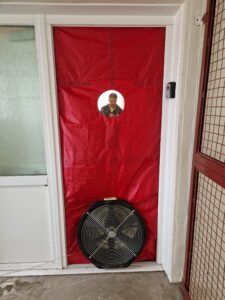
This project investigated how ground-source heating can support sustainable heating of retrofitted buildings, using a social housing development in the Cranhill area of Glasgow as a case study. Building heat demand for a single block was modelled using ESP-r, with a base case demand of 105.4 kWh/m²·year under the current climate, reducing to 84.4 kWh/m²·year by 2080 due to global warming. Retrofit measures were considered successively, with air tightness delivering the largest reduction in heat demand (11.8%), followed by cavity wall insulation (9.5%) and triple glazing, giving a combined reduction of 23.3% and a peak load of 4.5 kW.
p
Geological analysis of the Cranhill area identified sandstone, siltstone, mudstone, fireclay, basalt and clay, giving a harmonic mean thermal conductivity of 2.1 W/(m·K) at 200 m depth and base geothermal gradient of 22.5°C/km. Borehole heat exchanger designs were proposed per block, considering three rectangular configurations (110, 64 and 45 boreholes as 10×11, 8×8 and 9×5 arrays respectively) and varying assumptions on peak load and geothermal gradient. Minimum borehole length (Lmin) ranged from 86.6 m to 203 m depending on these assumptions, reducing with global warming and retrofit. Assuming 80% of buildings at peak load demand, Lmin was 110 m for the 10×11 configuration and 154 m for the 8×8 configuration; the 9×5 configuration was ruled out due to excessive depth requirements (>170 m). Full retrofit reduces Lmin by 20–25 m per borehole, yielding capital drilling savings up to £44,000 in drilling costs for the 110-borehole configuration. Future work should include obtaining occupant behaviour and energy use data, a thermal response test and a detailed financial analysis.
Developing of a Layered Testing Framework (DeLTeFrame) for Building Performance Simulation – Validating the ZUOS Home Energy Model
The DeLTeFrame project developed a comprehensive test and validation framework for Scene Connect’s ZUoS home energy modelling software. The framework combines three complementary validation approaches: inter-model comparison against recognised benchmark archetypes (BESTEST), empirical validation using high-resolution test house measurements, and validation against large-scale, low-resolution energy datasets. By progressing from controlled experiments to representative real-world data, the framework provides increasing confidence in the reliability of ZUoS predictions.
p
The principal outcomes from the project were an improved ZUOS model and the modelling framework and its integration into future ZUoS releases, enabling automated replication of validation tests and continuous quality assurance as the software evolves. This ensures that model accuracy, transparency, and stakeholder trust (householders, utilities, lenders and policy makers) are maintained over time. A further important outcome from the project was upskilling of Scene Connect staff in the methods and data requirements for appropriate validation of energy modelling software.
Sustainable Retrofitting Challenge: CPD Development based on SNRC
This pioneering project has delivered significant impact by creating a new model for sustainable retrofit education, research, and industry collaboration, with the Scottish National Retrofit Centre (SNRC) established as a nationally significant living demonstrator of net-zero retrofit innovation. By bringing together academia, industry, government, and international partners, the project has successfully transformed research knowledge into practical solutions that support the decarbonisation of the built environment.
p
The project has developed impactful educational and professional resources, including the Sustainable Retrofitting Toolkit for Educators and the Retrofitting Future CPD programme, equipping the next generation of professionals and industry practitioners with the skills required to deliver sustainable retrofit at scale. Through applied learning, industry engagement, technical workshops, site-based activities, and international collaboration, the project has enabled learners to explore real-world challenges in whole-life carbon assessment, circular economy, digital innovation, and net-zero delivery.
p
Beyond its original objectives, the project has created a lasting legacy through strengthened academia industry partnerships, international knowledge exchange, research publications, and follow-on innovation opportunities in AI-enabled decarbonisation and digital twins. The SNRC case study has demonstrated how living laboratories can accelerate knowledge transfer, inspire innovation, and bridge the gap between research and practice.
p
This project provides a transferable blueprint for sustainable retrofit education and professional development, supporting Scotland’s net-zero ambitions and contributing to global efforts to create resilient, low-carbon, future-ready buildings.
p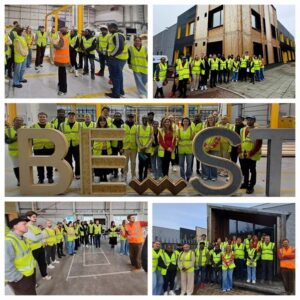
Edinburgh College’s Renewable Heating Journey
This project has delivered an evidence-based case study documenting the transformation of Edinburgh College’s Midlothian Campus from a legacy gas heating system to a combined Air Source Heat Pump (ASHP) and Water Source Heat Pump (WSHP) solution. Delivered through collaboration between Edinburgh College, Vital Energi, CeNZ-HighDB and the University of the West of Scotland.
p
The resulting case study provides a valuable resource for the further and higher education sectors, supporting knowledge exchange and encouraging wider adoption of low-carbon heating solutions.
UWS Campus & Residences Decarbonisation and Cost-Reduction Programme
The University of the West of Scotland (UWS), in partnership with the Centre for Net Zero High Density Buildings (CeNZ-HighDB), has completed a project to assess the pathway towards a low-carbon, energy-efficient and future-ready estate. The project has evaluated opportunities for decarbonising priority campus buildings and student residences through low-carbon heating solutions, energy efficiency measures and building fabric improvements.
p
Through detailed surveys, energy assessments, modelling and technical feasibility studies, the project has developed an evidence-based retrofit roadmap to support future investment decisions and phased implementation. The outcomes provide UWS with a clearer understanding of the technical challenges, opportunities and priorities associated with decarbonising a diverse estate, including pre-1919 and hard-to-treat, hard-to-heat buildings.
p
The project has strengthened collaboration between UWS, CeNZ-HighDB, consultants and technology partners, creating a foundation for future pilot projects, monitoring and knowledge sharing. The next phase will focus on demonstrating and evaluating suitable retrofit approaches within the UWS building portfolio
p
This work supports UWS’s Strategy 2030 ambitions and commitment to achieving net-zero operations by 2040, while contributing to wider learning on the decarbonisation of public sector estates.
p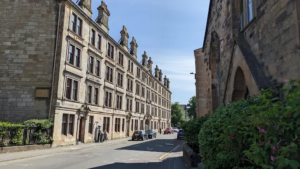
Regional Energy Masterplan: Archetype Phase 2
The project built on the housing archetype methodology developed during REMP Phase 1 by expanding and refining wall-based archetypes for non-traditional and traditional housing types. Through literature review, site visits, and the analysis and integration of local authority data with Home Analytics Scotland datasets, the project strengthened and expanded the Wall Method of Construction (W-MoC) archetype methodology. A total of 33 non-traditional archetypes were identified, coded, and documented during this phase, alongside eight traditional archetype classifications.
p
The validated datasets were used to develop a user-friendly digital Archetype Dashboard for each participating local authority. The dashboard enables users to explore, visualise, and manage their housing stock archetypes, including associated energy performance and spatial distribution, providing a practical decision-support tool for retrofit planning. The project also produced archetype pattern books designed for homeowners, providing accessible guidance to support retrofit decision-making at the household level. Overall, these outputs provide an accessible framework for planning domestic retrofit programmes and support wider adoption of the archetype methodology across REMP member authorities and beyond.
Stemovators Annual Challenge – ‘Construct a Crane’
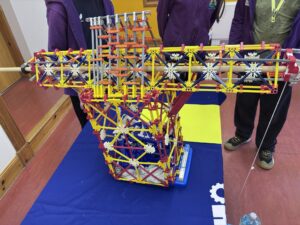
The Construct a Crane project successfully demonstrated how practical, curriculum-linked STEM activities can inspire young people to explore construction, engineering and the skills needed to support Scotland’s transition to net zero. Delivered by Stemovators in partnership with Scottish Government and co-funded by the Centre for Net Zero High Density Buildings (CeNZ-HighDB), and co-f the project connected classroom learning with real-world challenges such as high-density development, regeneration, retrofit and modern methods of construction.
p
During the project, 151 Construct a Crane kits were distributed to schools across Scotland, with participation from 28 local authorities and an estimated 3,000 pupils. Through CeNZ-HighDB support, the project expanded into the Edinburgh and South East Scotland City Region, reaching up to 25 schools and around 600 pupils, while the wider programme extended engagement to schools across Scotland.
p
The partnership embedded net zero construction and careers messaging throughout classroom resources, teacher CPD and programme activities, helping pupils understand the important role the construction sector plays in delivering a more sustainable future. The project also strengthened collaboration between education, research and industry through regional STEM events and stakeholder engagement, creating a scalable model for developing future skills and broadening participation in engineering and the built environment.
p
EDI Retrospective and Inclusive Adaptation Analysis for PlanBEE – Scotland Feasibility Study
This project assessed the feasibility of adapting the successful PlanBEE higher-level apprenticeship model for Scotland, with a focus on Edinburgh and South-East Scotland and potential future scaling across other regions. Through engagement with employers, colleges, training providers and strategic stakeholders, the study explored how the industry’s rotational apprenticeship model could support future inlcusive workforce development within Scotland’s built environment sector.
p
The project has increased awareness of innovative apprenticeship delivery models, strengthened collaboration between industry and education partners, and provided an evidence base to support future pilot development as well as follow on funding routes. It has also highlighted the importance of embedding equality, diversity and inclusion considerations within future programme design. The recommendations will inform future discussions and planning activities aimed at creating more accessible, industry-led pathways into construction and the built environment while supporting Scotland’s skills and net zero ambitions.
p
The study produced practical outputs including learner personas, EDI recommendations and implementation guidance to support future pilot development. It has also informed the Built Environment Net Zero pathway concept which would draw upon areas of best practice including PlanBee. Funding avenues for BENZ are being sought.
HCI Legacy: Informing an Inclusive Skills Framework for Net Zero Construction
The Future-Ready Skills Framework project has established a practical foundation for supporting skills development, knowledge exchange, and collaboration across the built environment sector.
p
The project developed a scalable Skills Knowledge Hub that brings together resources, case studies, project outputs, and learning materials in a single accessible location.
p
The project strengthened connections between industry, education, and skills stakeholders while creating a mechanism for sharing knowledge and promoting best practices.
p
The Skills Knowledge Hub has been designed to continue evolving as new projects and resources become available, ensuring that the benefits of the project extend beyond its delivery period and continue to support future sector innovation and impact.
p
p

CeNZ-HighDB-Powering Futures-School Challenge Programme 2025/26 – Challenge Setter
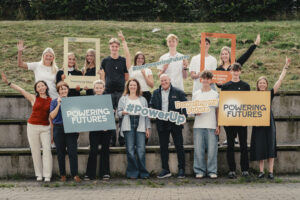
CeNZ-HighDB collaborated with Powering Futures, HCI Skills Gateway, Vital Energi and a wider network of industry partners to support the delivery of the “Hot Stuff” challenge as part of the Powering Futures SCQF Level 6 qualification programme. The challenge engaged 2,303 S5 and S6 learners from over 100 secondary schools across Scotland, encouraging them to explore solutions for low-carbon heating, sustainable housing and future communities.
.
Learners developed over 100 team-based proposals, demonstrating innovative thinking around district heating, renewable energy, energy efficiency, affordability and community wellbeing. The challenge provided participants with insight into the opportunities and challenges associated with delivering a net-zero built environment while raising awareness of related career pathways.
.
The project strengthened links between education, industry and research organisations and contributed to ongoing discussions around future-ready skills for the transition to a low-carbon economy. The outputs generated through the programme highlight the value of challenge-led learning in engaging young people with sustainability issues and inspiring the next generation of talent for the built environment sector.
.


NextGen Summit
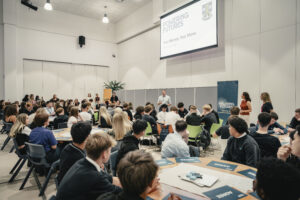
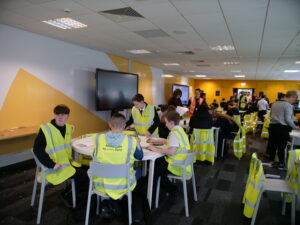
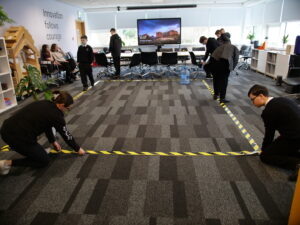
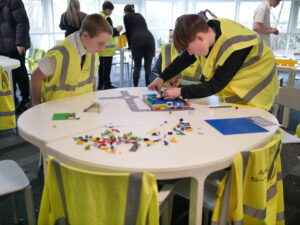
The Next Gen programme successfully delivered an engaging, inclusive learning experience for 60 pupils from ASN schools in North Lanarkshire who participated in a full-day hands-on design challenge, developing knowledge of sustainable construction, teamwork and problem-solving skills. The programme successfully increased awareness, supporting equity, diversity and inclusion objectives.
.
Feedback highlighted strong engagement with practical, hands-on learning, as well as the value of collaboration and peer interaction across schools. Participants demonstrated increased confidence, improved understanding of materials and construction concepts, and high levels of enjoyment throughout the day.
.
The project highlights the value of experiential learning and cross-sector collaboration in addressing skills gaps, inspiring the next generation, particularly to consider pathways into construction and the built environment that they may not have previously seen as accessible or relevant. It also demonstrates how early, targeted engagement can help build confidence, raise aspirations, and create more inclusive talent pipelines for the sector.
.
Innovation of UK-grown wood wool as a novel and sustainable insulation material
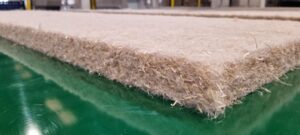
This project explored the feasibility of using wood wool as a locally sourced, sustainable insulation material for the UK construction sector. Addressing the current reliance on imported insulation products, the study focused on developing insulation boards from UK-grown resources and evaluating their thermal and acoustic performance.
.
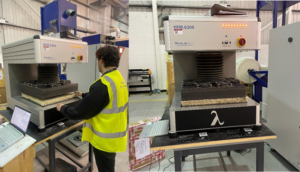
The results demonstrate that wood wool insulation can be produced at pilot scale, although process adjustments were required to achieve stable manufacturing. Thermal testing showed conductivity values in the range of 0.040–0.042 W/m·K, placing the material within the performance range of natural and fibrous insulation materials and suitable for typical building applications. Acoustic testing also revealed strong sound absorption, particularly at mid- to high frequencies, with some compositions performing comparably to conventional materials such as mineral wool.
.
The project highlighted important manufacturing considerations, including material behaviour and compatibility with existing production systems. The need for secondary fibres to support processing indicates that further optimisation is required to fully understand the performance of wood wool alone.
.
Overall, the findings suggest strong potential for wood wool as a low-carbon, bio-based insulation material. Its compatibility with breathable construction makes it particularly relevant for retrofit and high-density building applications.
.
Transforming Timber – Retrofit
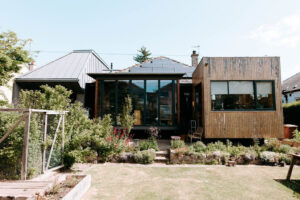
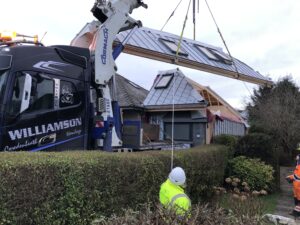
TT-R is a retrofit showcase case study of the art of the possible using advanced timber and renewable energy technologies. It is an exemplar timber MMC project that, in combination with other “Living Lab” projects, has enabled the full commercialisation of UK sourced mass timber and the development of a digitised kit of parts capable of responding to a range of contexts. The TT-R case study encapsulates the ethos of MMC by:
– Showcasing a collaborative procurement model and then capturing and presenting the value return from the retrofit and upgrade measures relative to capital investment.
– Demonstrating innovative proof of concept offsite timber technology solutions for retrofit and extension which have been tested and validated and further combined with renewable options.
– Capturing and presenting the whole life value impact of the interventions considering embodied and operational carbon to help inform the decision-making processes of future retrofit, extension, and renewable integration projects.
– Acting as the catalyst for factory investment and the commercialisation of UK sourced advanced timber technologies capable of responding to a range of contexts fully embracing the ethos of MMC.
.
CeNZ funding has enable the capture and codification of these outputs in a range of materials (video, webinar etc) and academic publications to broaden outreach and impact including the creation of educational outputs. The property went on to win ‘Scotland’s Home of the Year 2026’ (BBC).
.
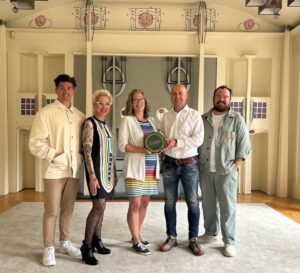
Allume Energy SolShare feasibility study (Common building stock)
The project successfully demonstrated the technical and financial viability of Allume SolShare technology across multiple social housing building types in Scotland. Building on the initial feasibility study for Building Type 1, the work extended analysis to additional high-priority building typologies, producing practical insights into system performance, suitability, and cost-effectiveness.
.
Through collaboration between Allume Energy, the University of the West of Scotland, CeNZ-HighDB, and East Ayrshire Council, the project combined housing data, energy usage profiles, and technical expertise to develop replicable assessment models and retrofit strategies
Scoping and Technology Repository Development with Changeworks
This project has successfully delivered a robust evidence base to support the decarbonisation of Scotland’s social housing through informed deployment of low-carbon heating and hot water technologies. Working in partnership with Changeworks, the University of the West of Scotland, Fife Council and technology providers, the Centre for Net Zero High Density Buildings (CeNZ-HighDB) has developed a comprehensive and scalable repository of emerging and established solutions.
.
The project combined technical data, real-world case studies and stakeholder insight to evaluate performance, cost, carbon impact and suitability across different housing contexts. This has created a practical decision-support tool that enables housing providers, local authorities and third-sector organisations to compare technologies, understand deployment risks and identify the most appropriate options for different building types and communities.
.
Beyond the technical outputs, the project has established a strong cross-sector partnership that links research, innovation and delivery. It provides a clear pathway from evidence to action, supporting live trials and future investment in low-carbon heat. The work lays a solid foundation for scaling up solutions that are not only environmentally effective but also affordable, reliable and appropriate for the people who live in Scotland’s high-density and social housing.
Evaluating the effect of residential retrofitting on different thermal system options for bespoke project areas in Glasgow
This project enhanced the open-access Centralisation Assessment Tool for Heat Pump Systems (CATHeaPS), allowing it to integrate openly accessible EPC data for Glasgow to assess how retrofitting impacts the techno-environmental-economic performance of thermal systems. The systems evaluated include 4th generation district heating, ambient networks with decentralised booster heat pumps, individual air source heat pumps, and individual gas boilers.
1
Key Outputs:
1
CATHeaPS 3.0: Evaluates retrofitting impacts, performs network routing, and provides comprehensive costs, electrical capacity requirements and CO2 emissions for each thermal system before and after retrofits proposed in the respective EPCs.
1
Data Methods: Developed workflows to leverage open-access EPC datasets.
1
Practical Application: A case study of Govanhill, Glasgow, ensures replicability.
1
CATHeaPS supports local councils and stakeholders in evaluating thermal systems, providing insights into costs, emissions, and electrical capacity requirements. This facilitates informed decision-making for urban decarbonization.
1
Accessible via GitHub, CATHeaPS 3.0 includes the Govanhill dataset and video tutorials to help public sector bodies plan low-carbon systems and assess retrofitting effects, advancing a just transition for Glasgow. An open-access journal submission is planned for early 2026.
Building of Edinburgh Homes Demonstrator (EHD) legacy: Case study to understand regional adaptability and EDI barriers for Net-Zero Housing
The EHD legacy project examined how EDI, workforce skills and regional conditions shape the adoption of modern methods of construction (MMC) for net-zero housing. The project produced a comprehensive case study and an EDI-focused analysis report highlighting the opportunities to strengthen inclusion in community engagement, workforce diversity and procurement approaches. The regional adaptability review brought together stakeholders from Highland and Island Enterprise to explore differences in rural and urban delivery models, identifying challenges around supply-chain capacities. Academic partnership with universities like Nottingham Trent University and the international delegation with the University of California, Berkeley, through workshops and site visits, were central to generating dialogue on Scotland’s MMC innovation.
1
The project’s output feed into a future development of educational output and learning toolkit designed to support policy makers, skills through CPD development and housing professionals in creating more inclusive and scalable net-zero programmes.
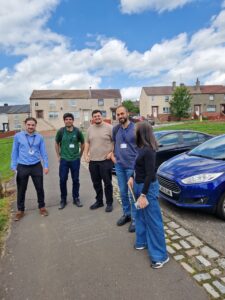
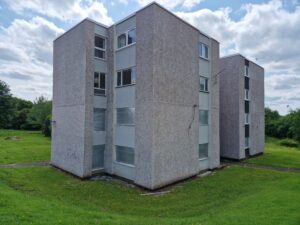
Decarbonised Heating Technology Analysis for High Density Social Housing Retrofit, Barshare, Cumnock
Modelling and simulation was used to assess the performance of different low carbon heating system options for high density social flats in Barshare, Cumnock. Key findings were as follows:
1
– Improvements to the existing flat building fabric reduced energy demand by up to 72%.
– The ground floor had up to 30% higher energy consumption than other floors in the building.
– Ground source heat pumps (GSHP) outperformed the air source heat pumps (ASHP) across all scenarios modelled, an average coefficient of performance (COP) of 3.64 compared to a COP of 2.54, respectively.
– GSHP annual running costs and CO2 emissions were 40% lower than to ASHP.
– Radiant heating energy and costs were 3x higher than GSHP, but the capital costs was substantially less, calculates indicated that savings from heat pump operation would take 20 years to offset their higher capital cost.
– Supply temperatures could be reduced to 50oC, without adversely affecting comfort, further reductions caused discomfort in less well insulated properties.
– Different GSHP borehole depths 100-200m were investigated, with the 200m borehole giving more stable temperatures and a higher COP.
Solar recharging of boreholes improved the COP of the GSHP, and enabled a 160m borehole to deliver similar levels of performance to the 200m borehole.
1
A 25 kWp PV system with a 30 kWh battery could supply up to 50 % of the GSHP’s annual electricity demand, representing about 15 % of the total PV generation, mainly during the shoulder months.
.
Mixergy Ltd feasibility study (building type 1)
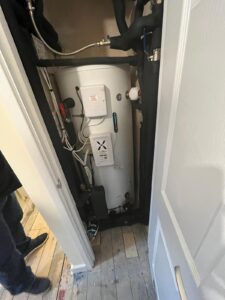
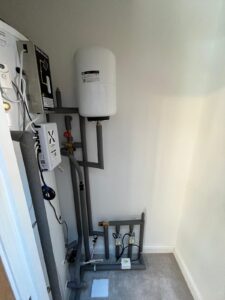
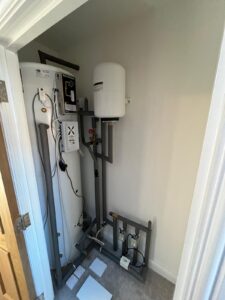
This project looked at how Mixergy’s smart hot water tanks could work in social housing and larger residential buildings to make heating water more efficient and sustainable. The collaboration between Mixergy, the University of the West of Scotland, and CeNZ-HighDB focused on understanding how the technology could connect with existing systems like solar panels, heat pumps, and smart energy tariffs.
1
By working with housing provider and energy partners, real data was gathered to explore the practical benefits and challenges of using smart thermal storage in common building block. The study showed strong potential for reducing energy use, cutting carbon emissions, and potentially lowering bills for tenants.
1
The project created a strong foundation for future pilot projects within this, or similar housing blocks as identified by EAC.
.
Allume Energy SolShare feasibility study (building type 1)
This project explored the feasibility of deploying Allume Energy’s SolShare technology – a world-first solution enabling shared solar for flats, in a 36-unit social housing block in East Ayrshire. In partnership with East Ayrshire Council, Allume Energy, and the University of the West of Scotland, the project aimed to reduce tenant energy costs, support decarbonisation, and create a replicable model for similar housing stock.
1
Key activities included site assessment, data collection, technical and financial modelling, and stakeholder reporting. Findings confirm that SolShare is a viable and impactful retrofit option, offering strong potential for lowering bills and carbon emissions in multi-residential buildings.
1
Next steps are to potentially live trial the system identified within the building/s and compare the modelled savings/benefits against the produced data and complete a post occupancy analysis on this system with a combined heating system.
1
Further to these, a follow-on involves expanding feasibility studies across wider housing stock, leading to a practical retrofit handbook – a one-stop guide covering housing archetypes, costs, benefits, and implementation pathways. This resource will support both EAC and other councils in identifying opportunities to deliver equitable access to clean energy at scale.
Retrofit Scotland website review and upgrade
The CeNZ Retrofit Scotland Review and Upgrade project delivered a documented guide through literature review, stakeholder discussions, case study analysis, and iterative mock-up design. This process informed the upgrade of the Retrofit Scotland website into a comprehensive online platform, now featuring retrofit case studies for the public and serving as a key channel for showcasing CeNZ-HighDB research outputs.
.
The upgraded platform prioritises clarity, accessibility, and ease of navigation, enabling users to quickly locate relevant retrofit information. It also provides the level of specificity needed to support informed decision-making. Proposed changes included standardising and updating content, enhancing web design and presentation, integrating relevant resources with case studies, and establishing a streamlined process for acquiring new case studies with complete and well-structured information.
.
The prepared guide outlines how resources can be embedded within the website, including online retrofit pattern books, categorisation by building archetypes, and best practice recommendations. It also highlights energy-saving measures, retrofit skill development, and other relevant guidance. These evidence-based resources strengthen knowledge exchange and contribute to shaping effective energy policies and delivery programmes, supporting Scotland’s transition towards achieving Net Zero by 2045.
Subscribe to our Newsletter
To opt-out of our newsletter or view our Newsletter Privacy Statement, view here.
"*" indicates required fields